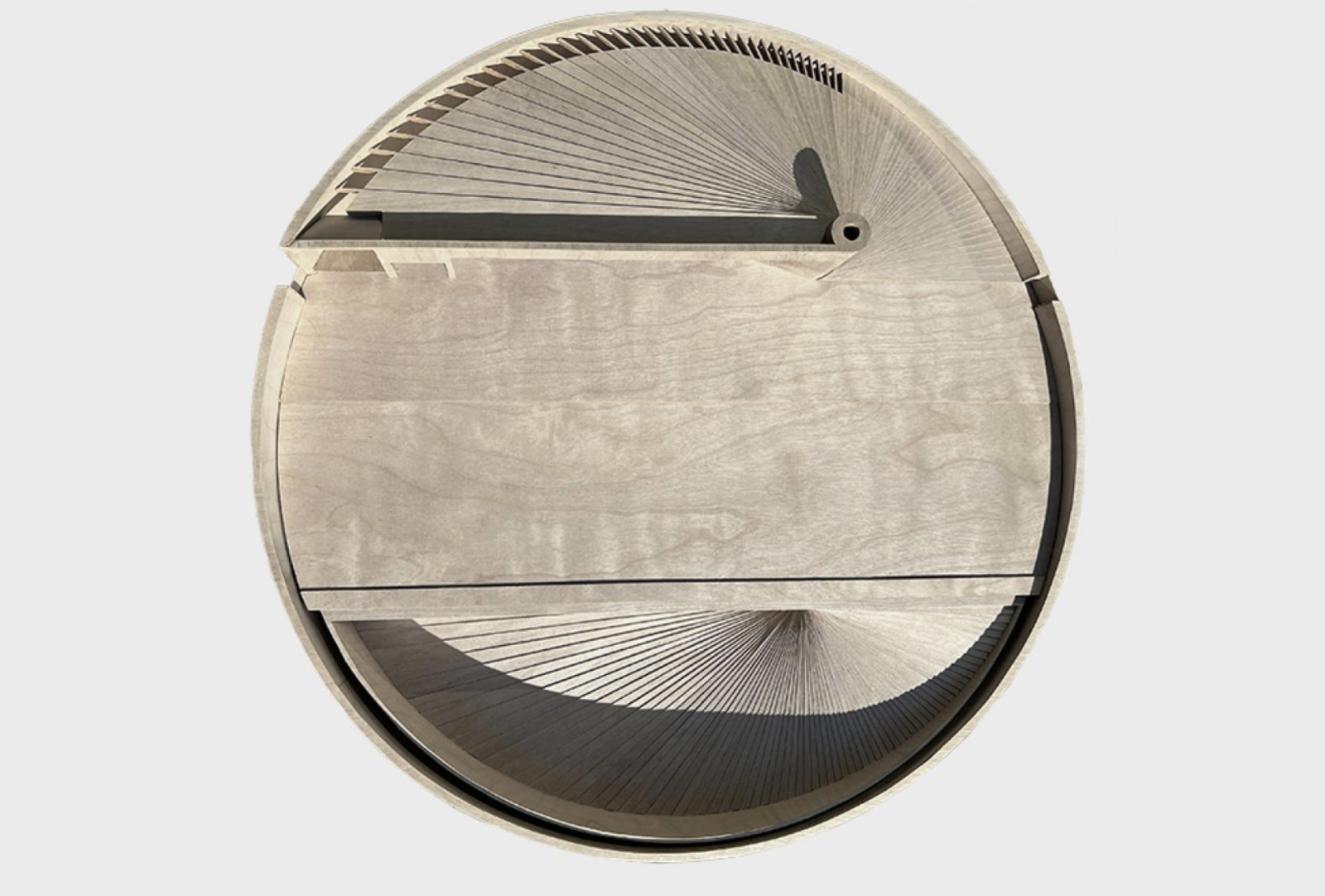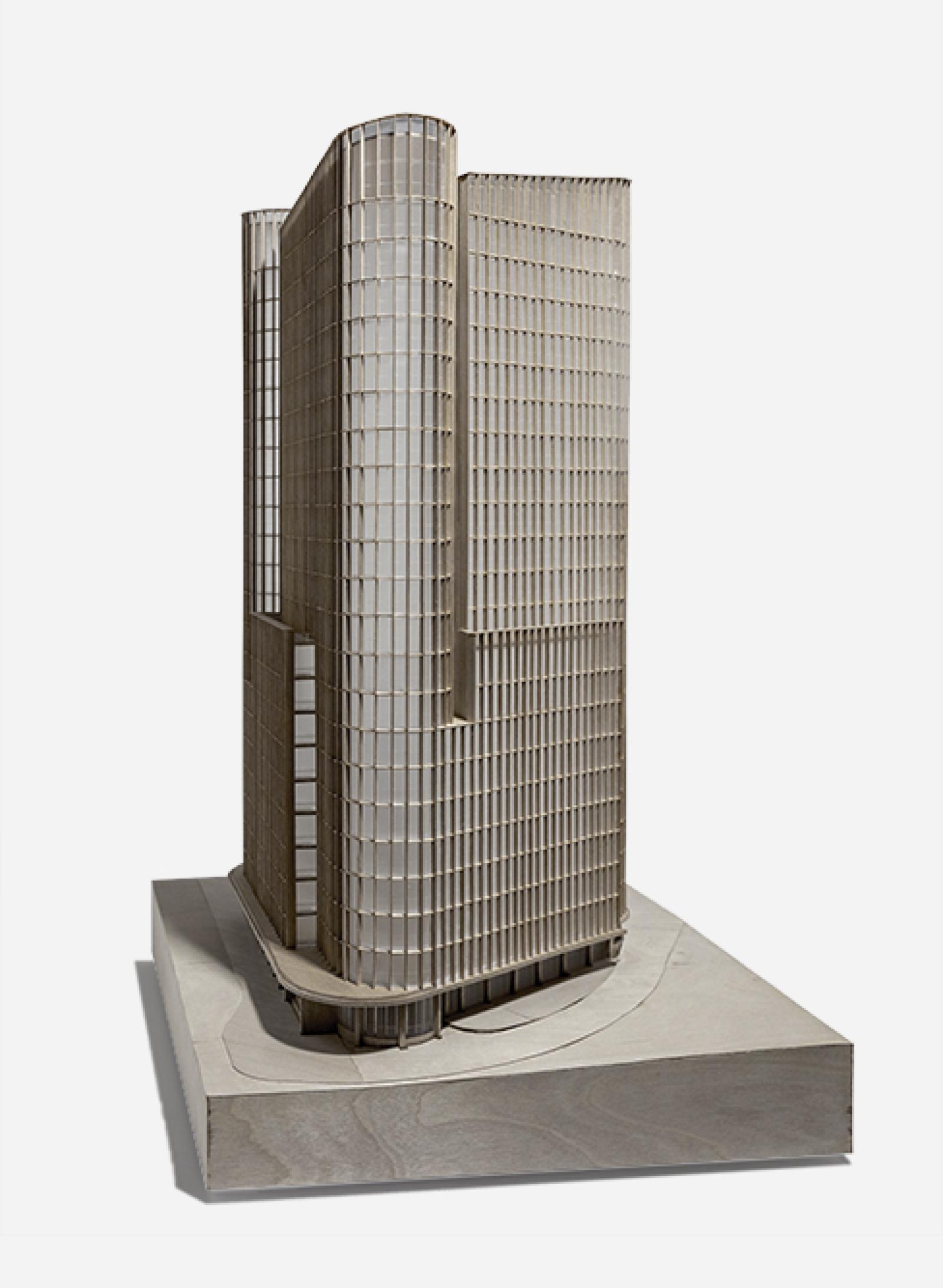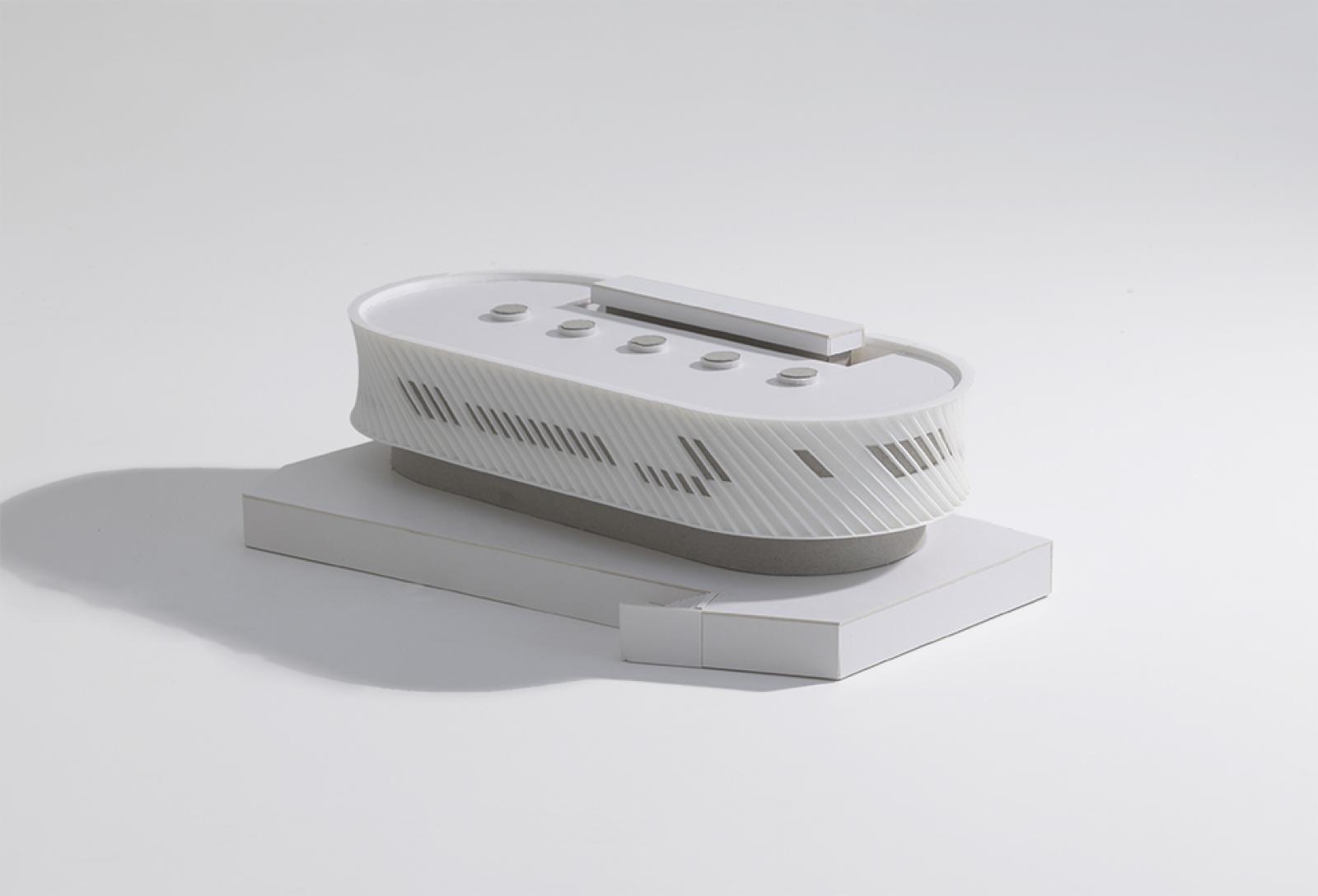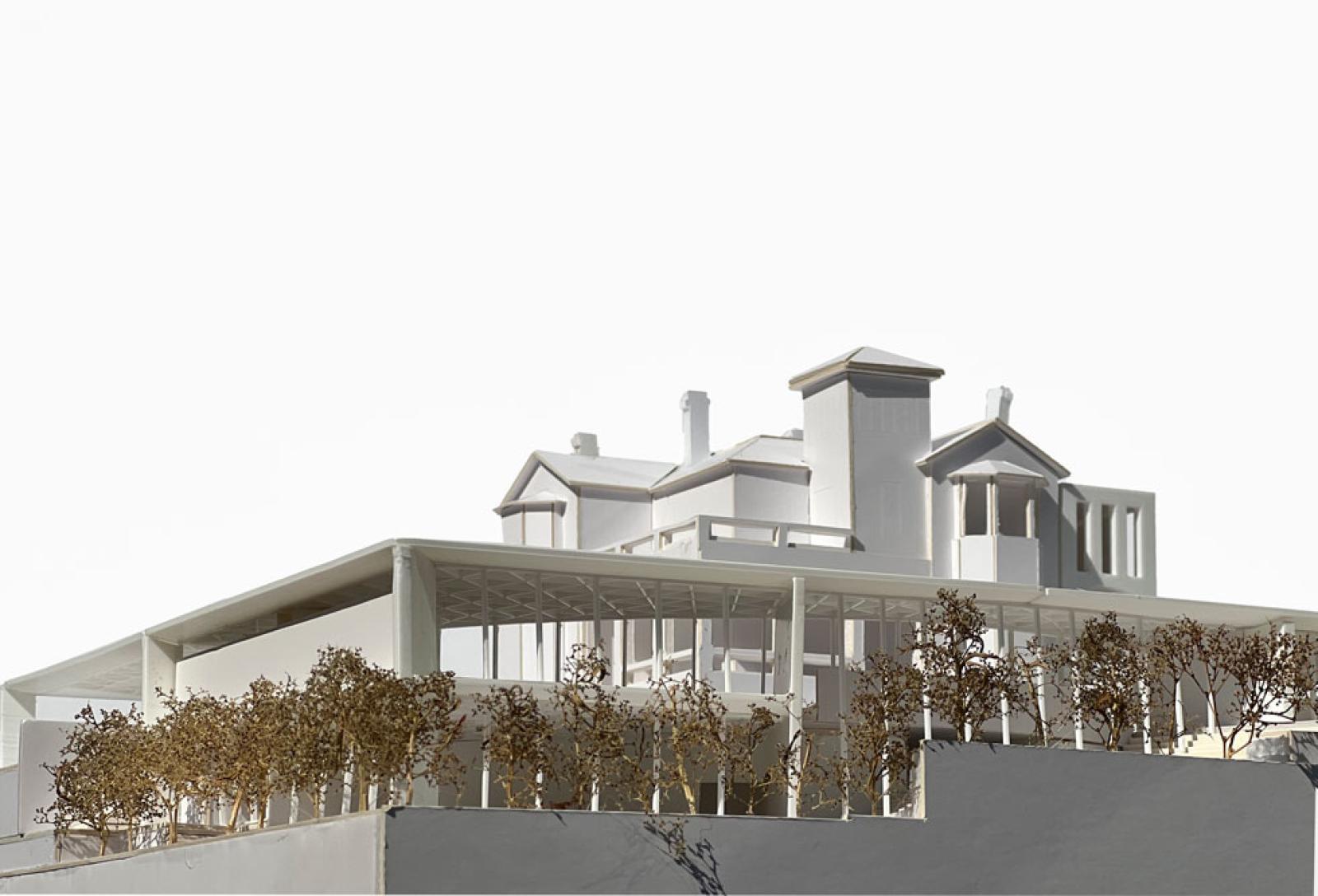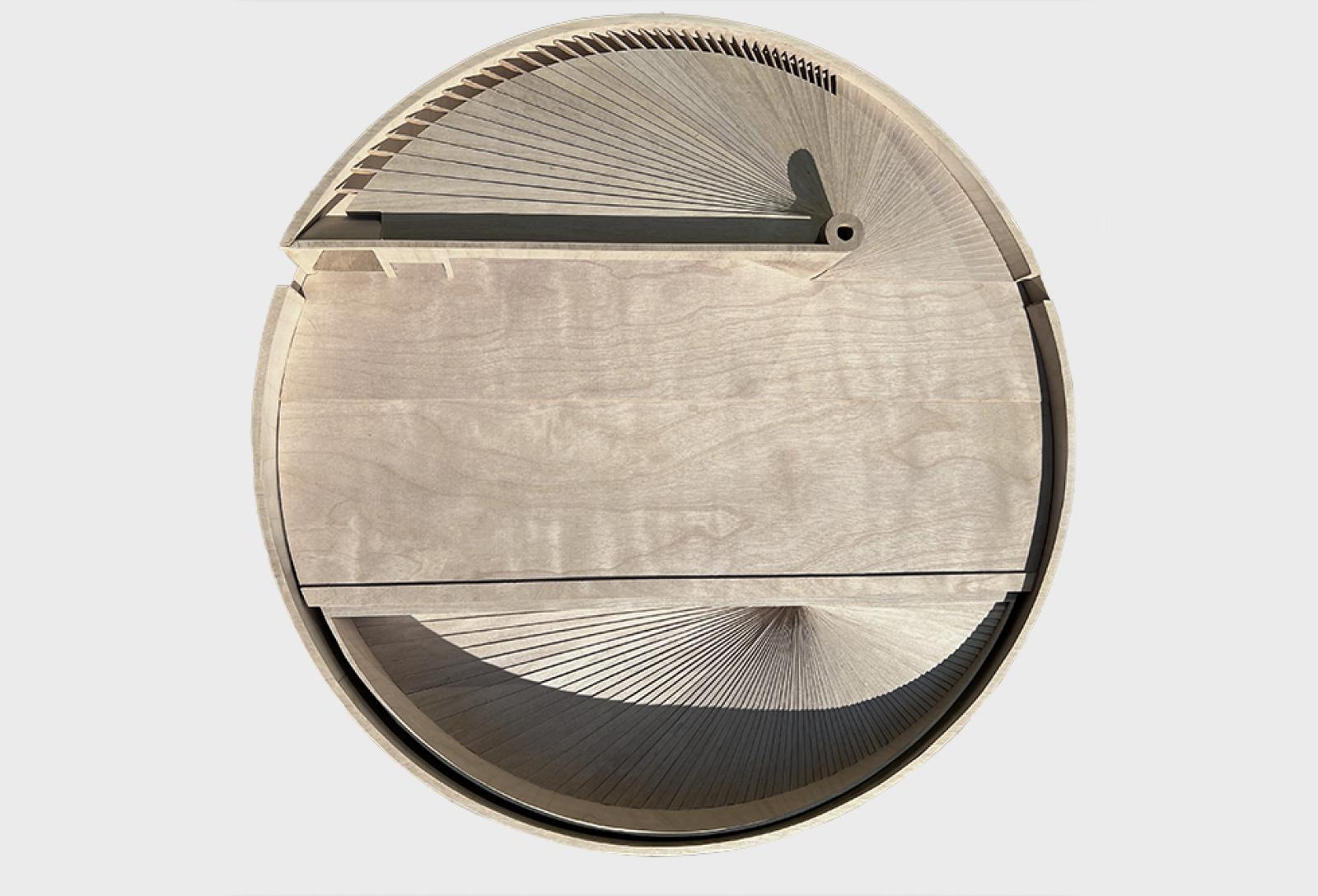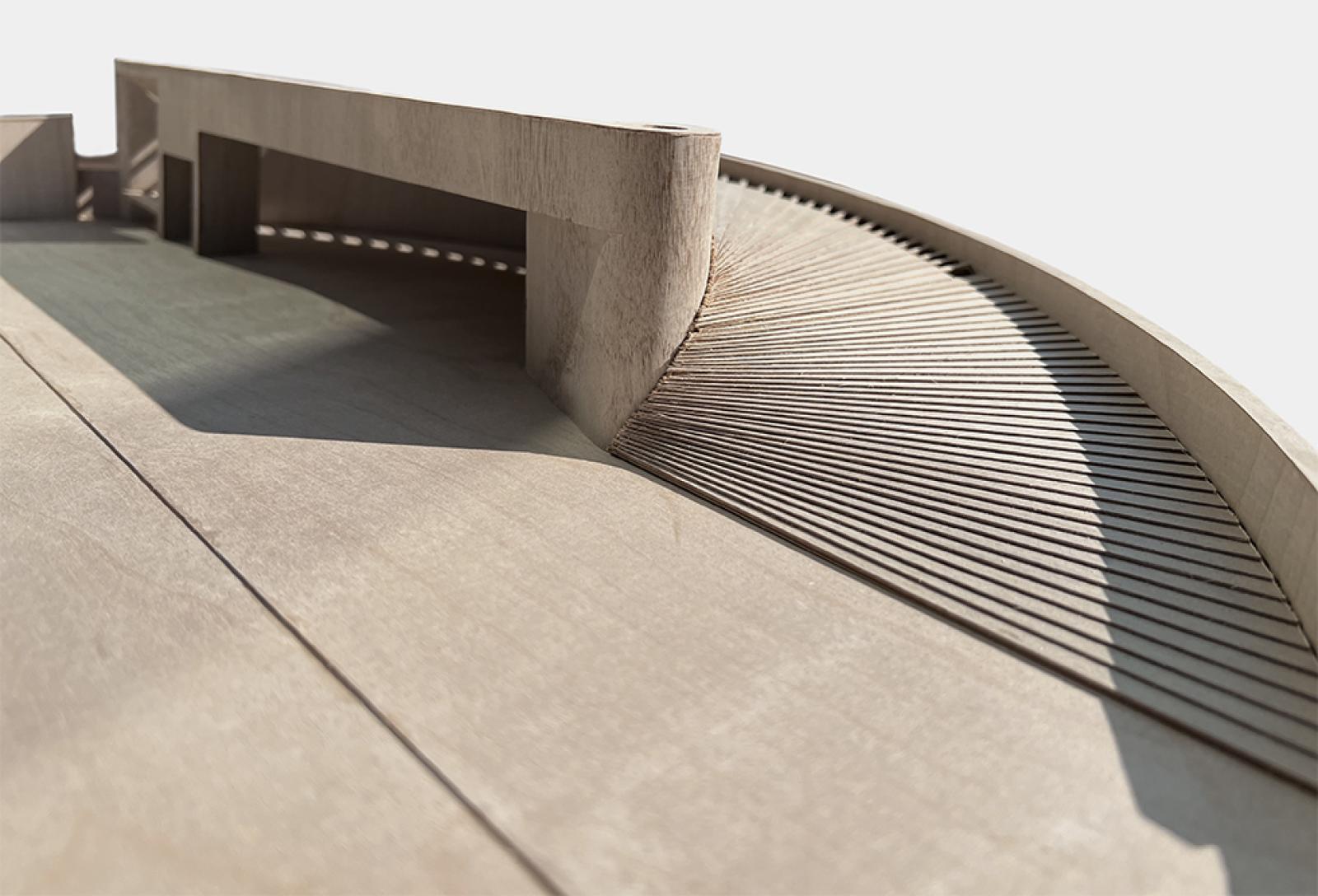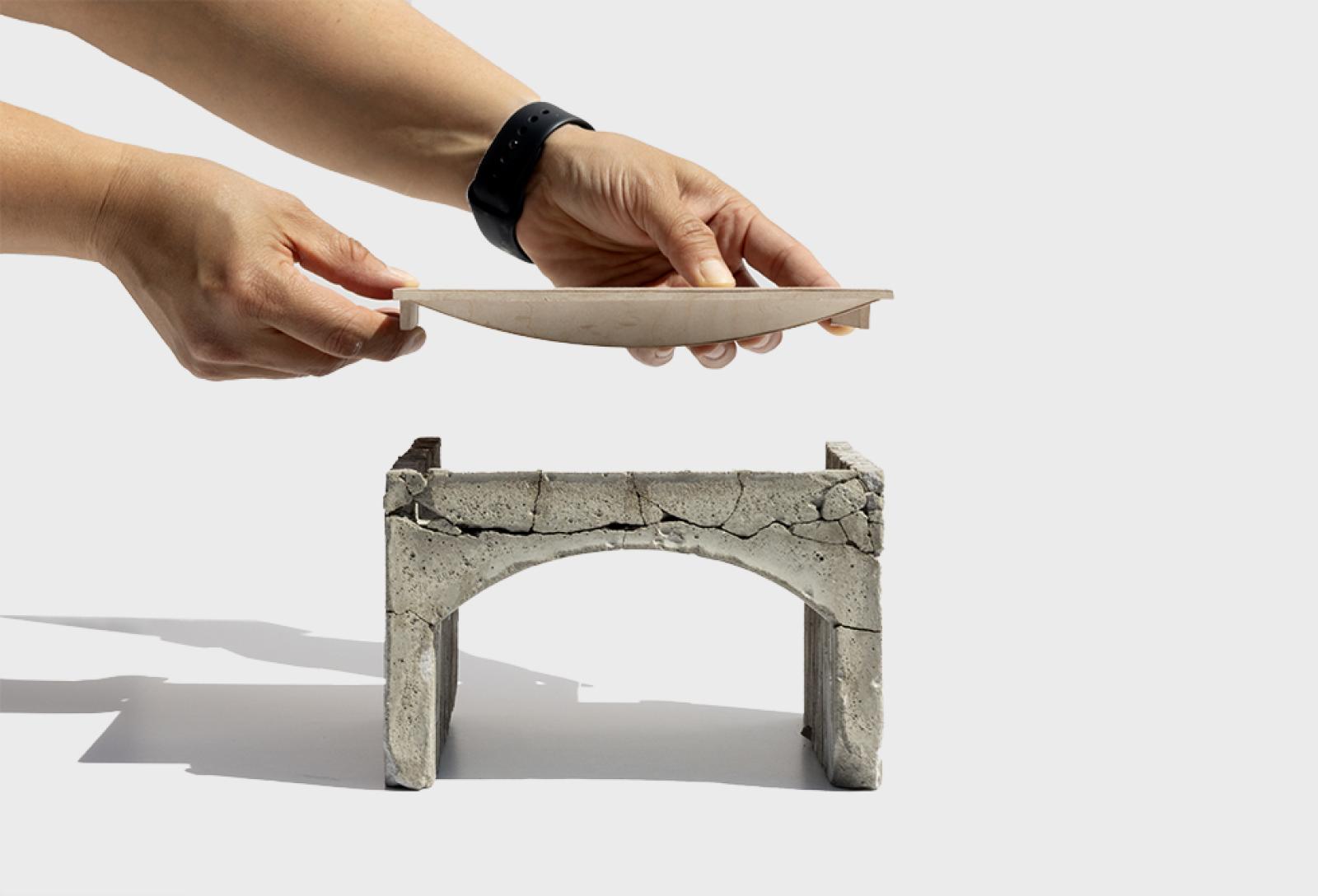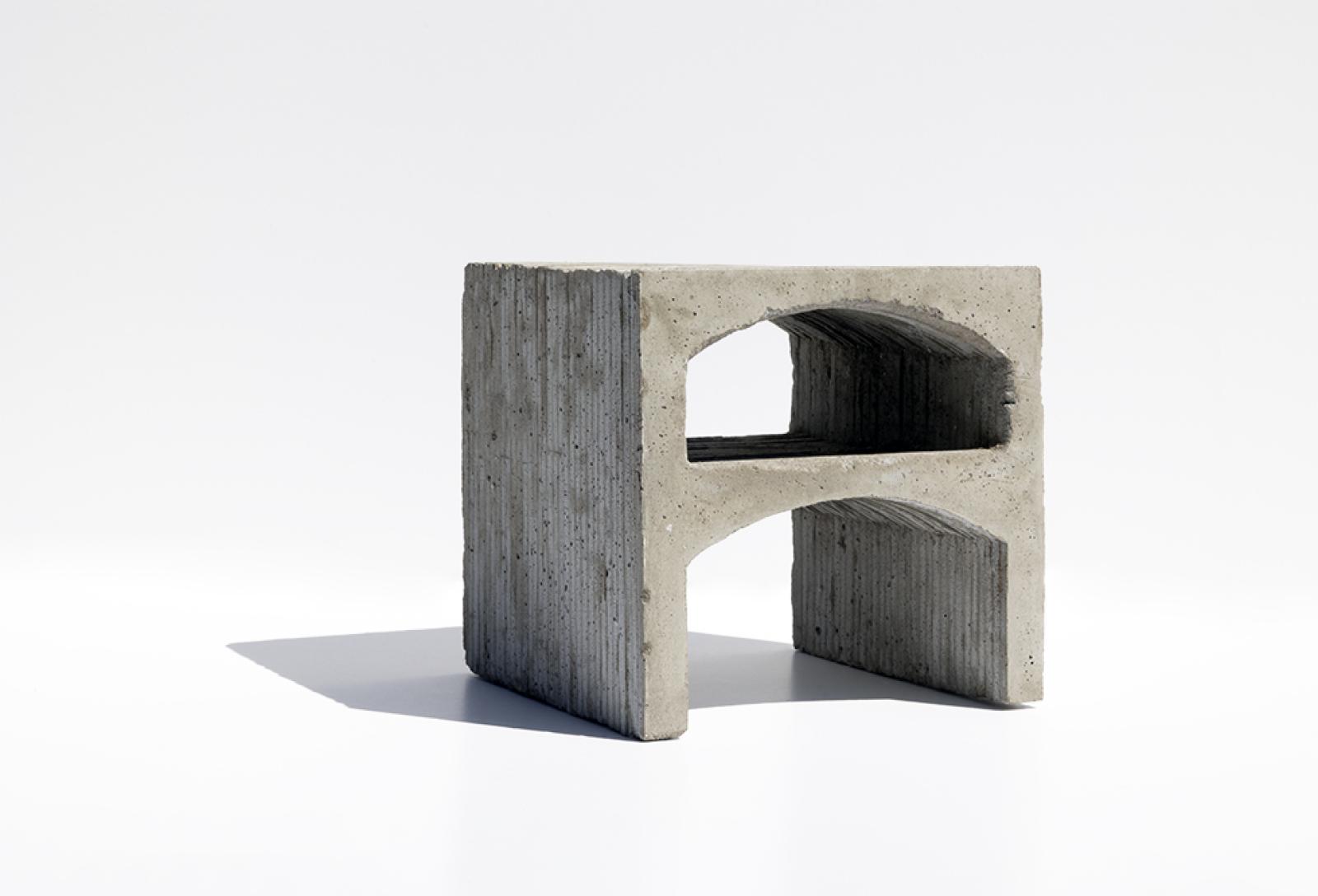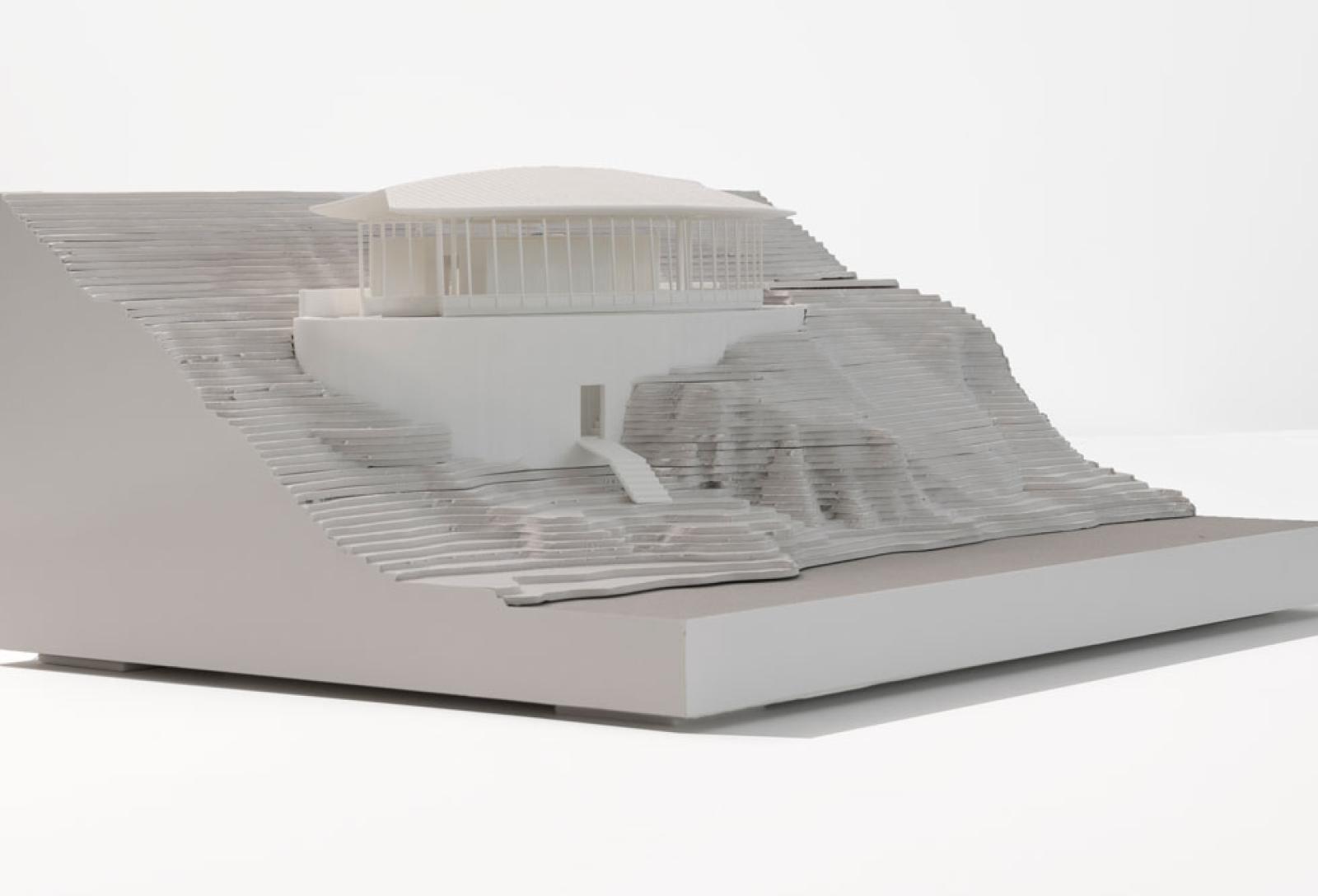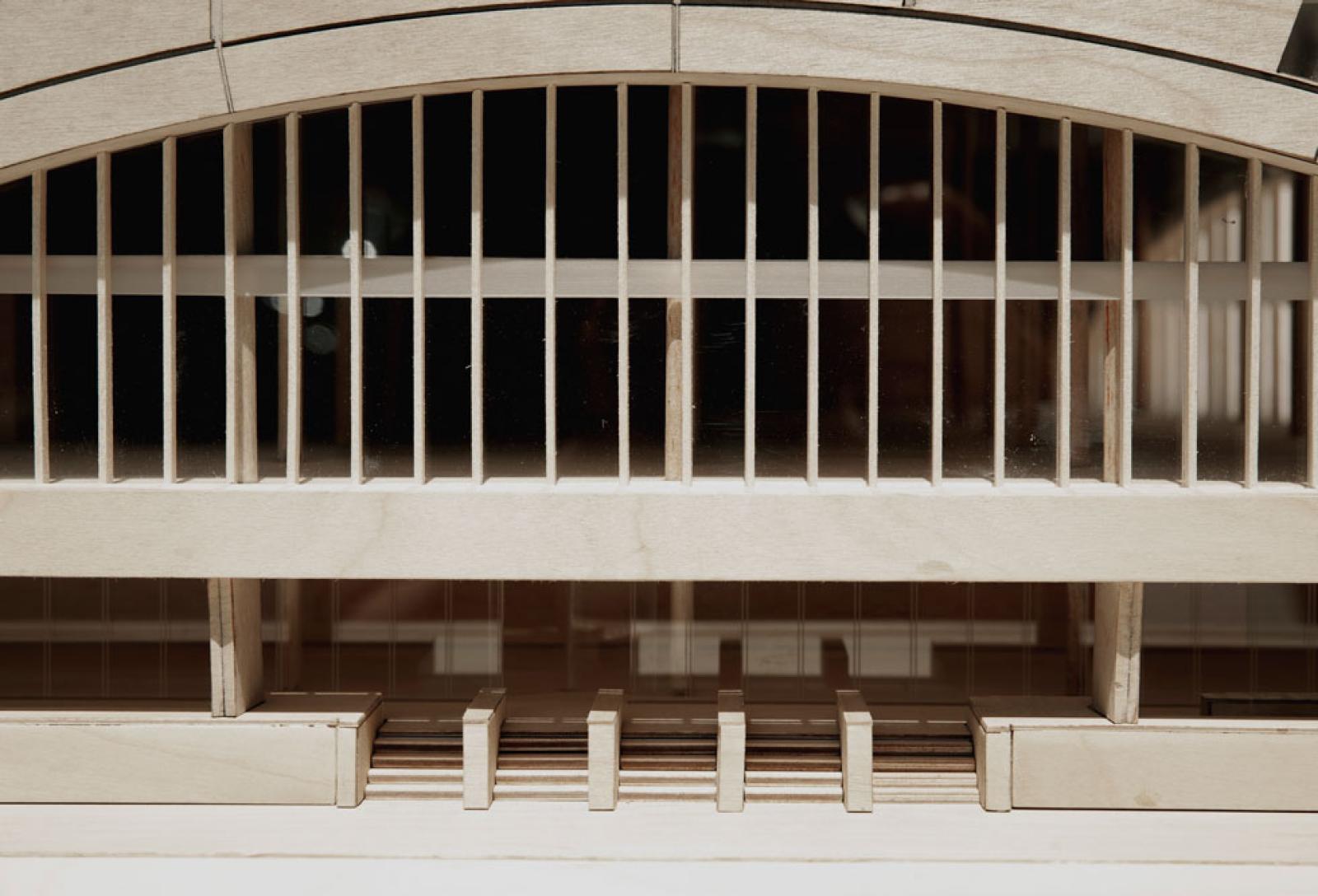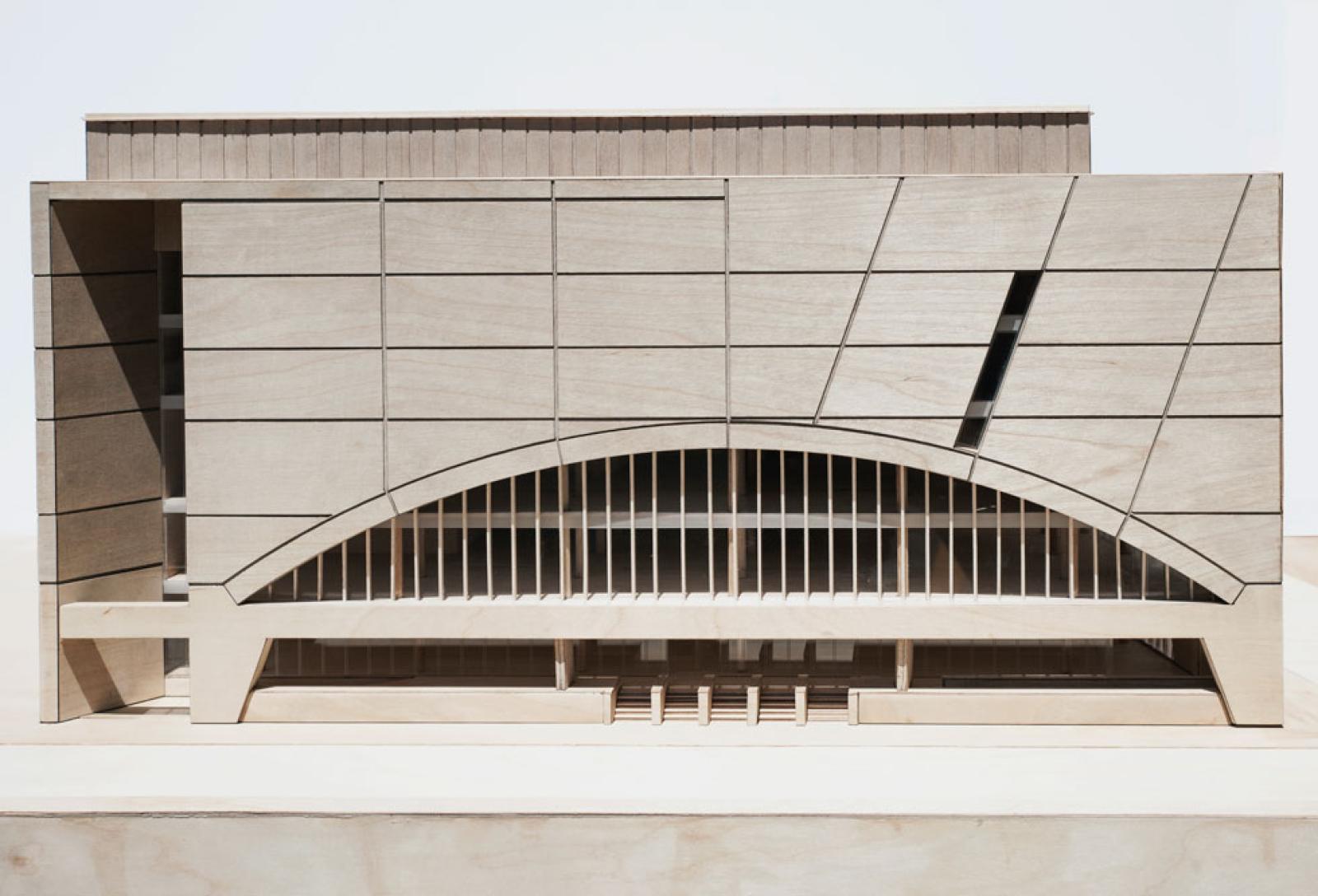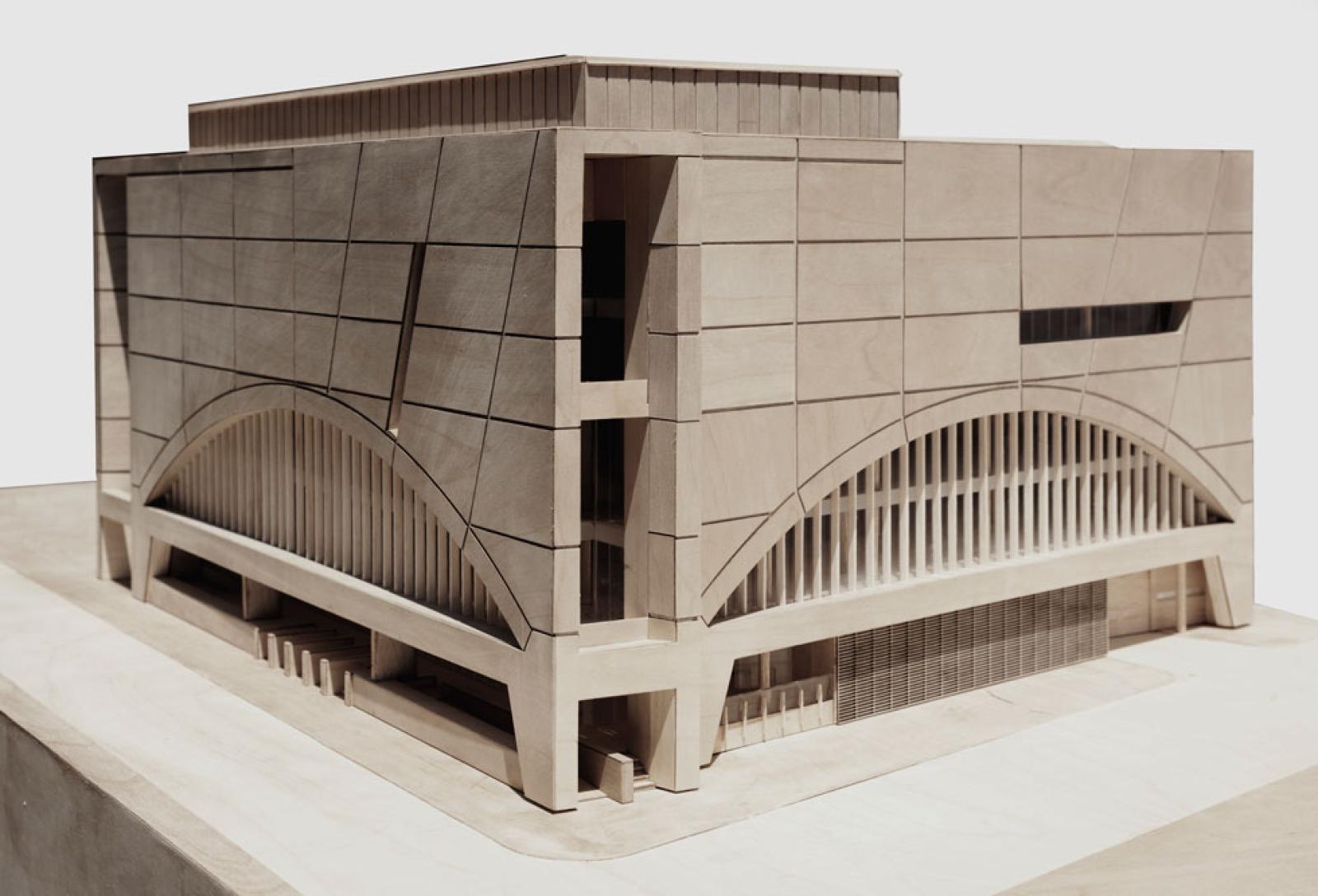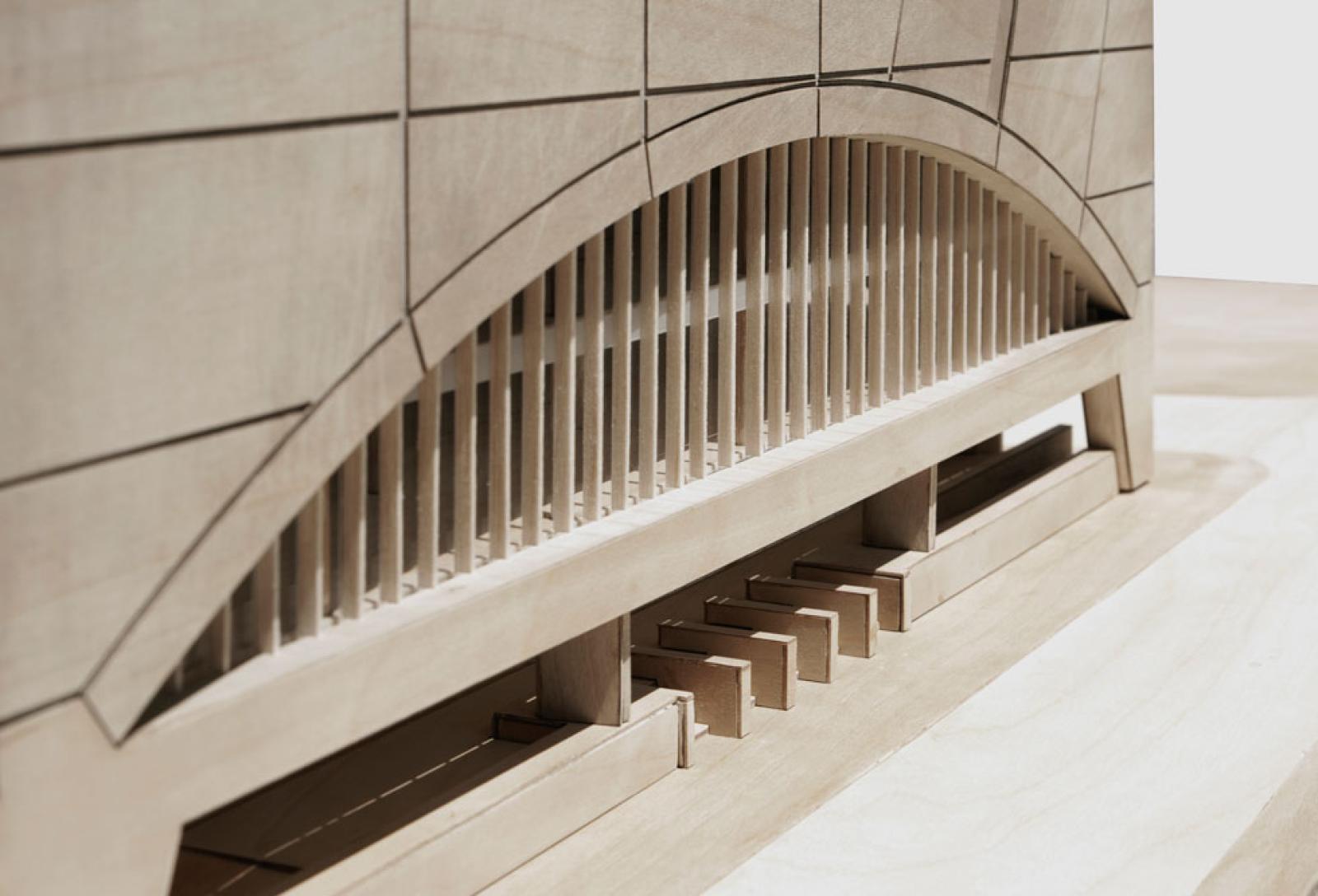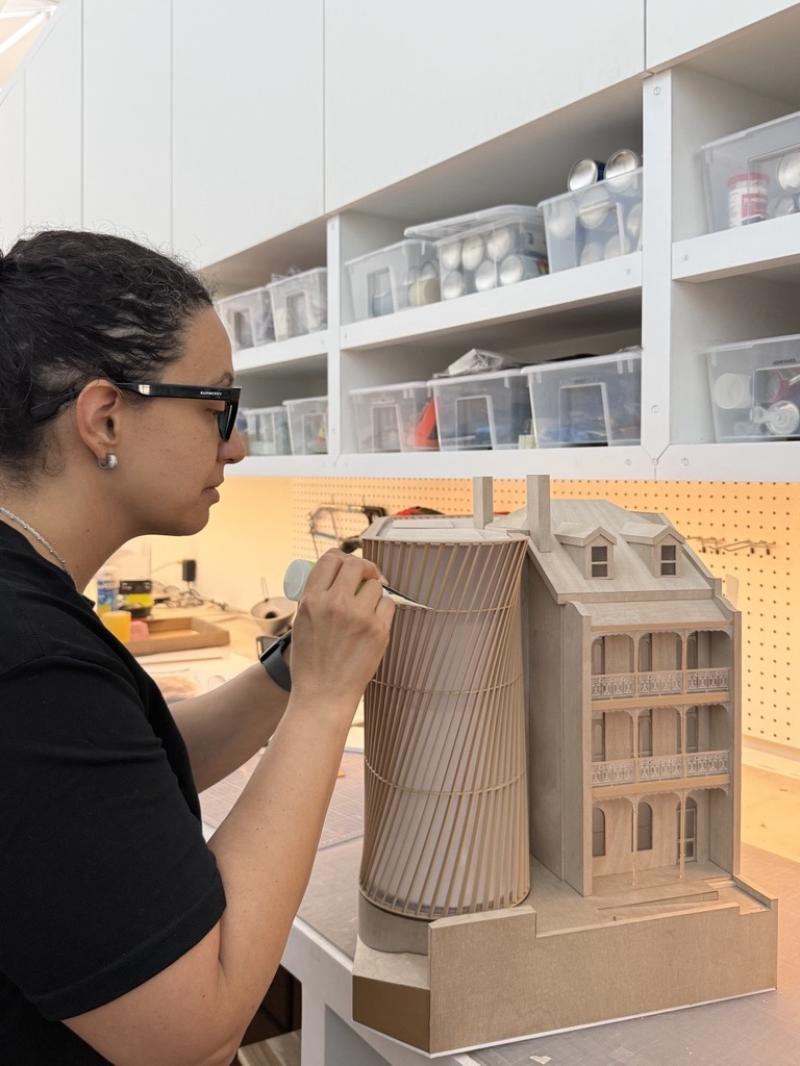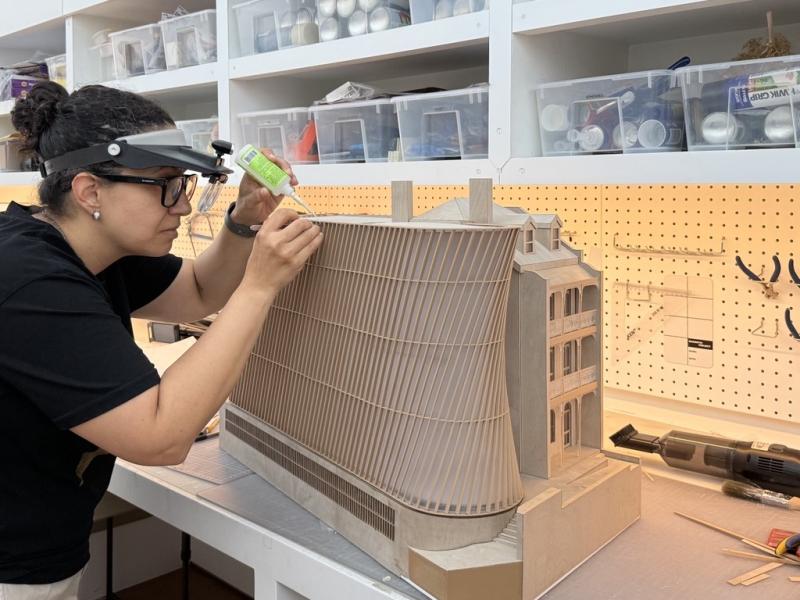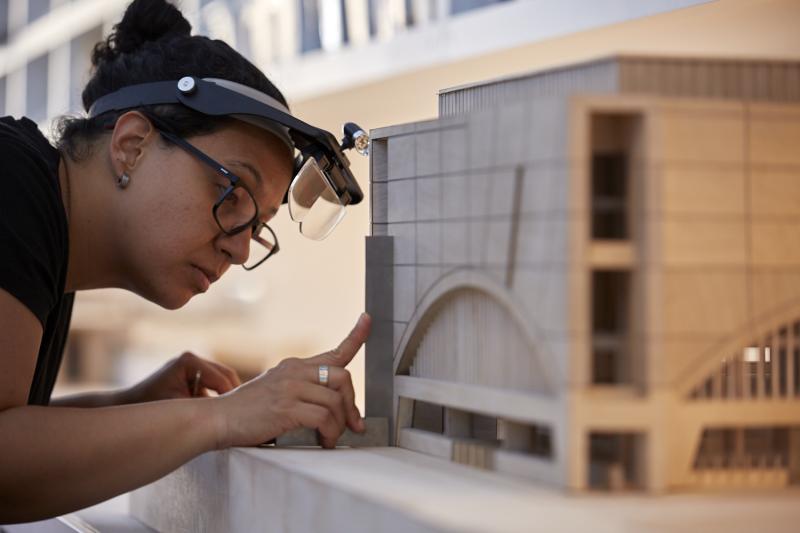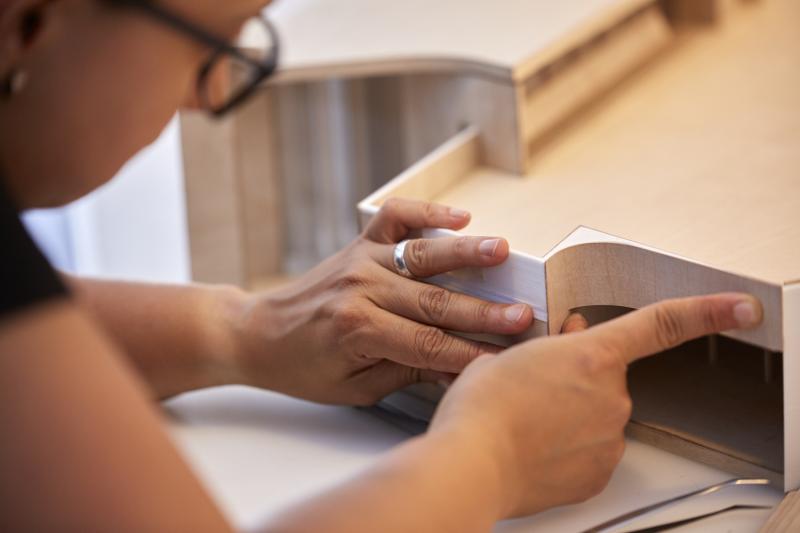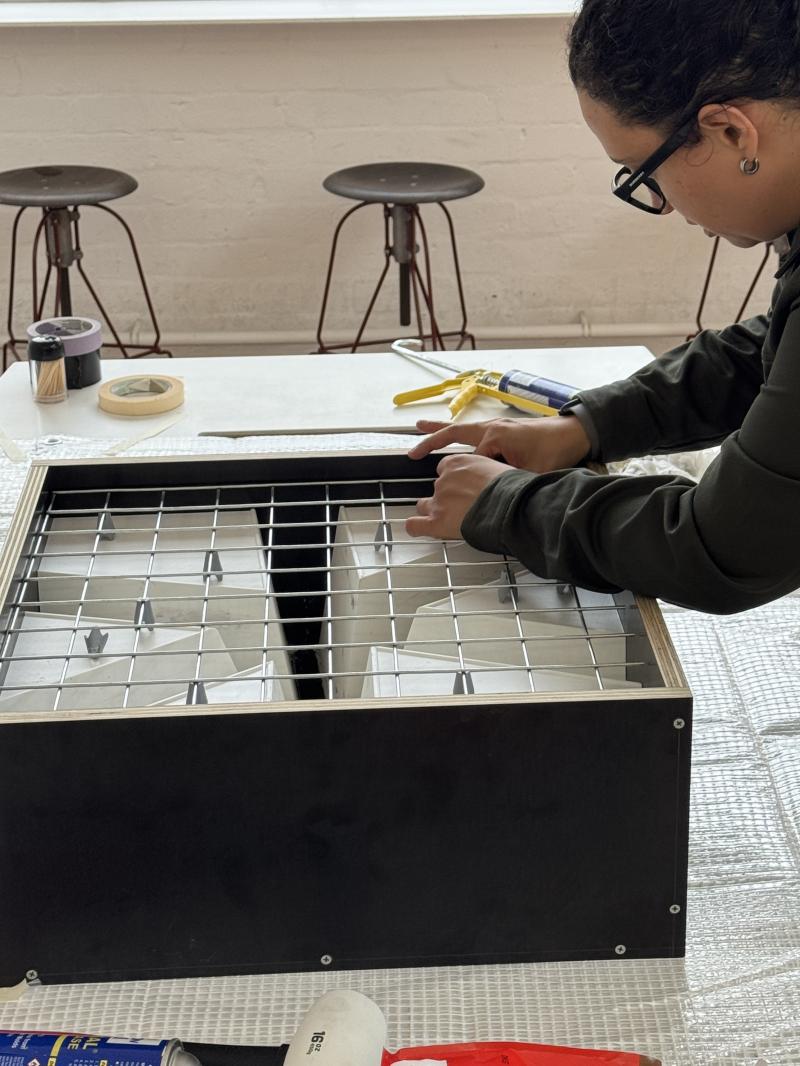
Modelmaking in architecture is a spatial and tectonic investigation rather than a simple act of representation. It begins with a close reading of the architectural drawings — plans, sections, and elevations — to understand proportion, hierarchy, structure, circulation, and the relationship between solid and void. The model is not a copy of the drawings; it is a translation of two-dimensional information into spatial form.
The process starts by establishing scale, which immediately determines the level of abstraction, material thickness, and degree of detail. At this stage, the architect must anticipate how the building will be constructed in miniature: which elements are primary structural components, which are secondary layers, and how joints, planes, and volumes intersect. This mental sequencing of assembly reflects real construction logic — understanding load, enclosure, and spatial enclosure — even if expressed abstractly.
Material selection is intentional and conceptual. Wood, card, acrylic, or plaster are chosen not only for practicality but for what they communicate about mass, weight, transparency, or texture. A conceptual massing model may prioritise volume and proportion, while a developed model begins to articulate façade rhythm, structural systems, and interior spatial relationships.
As the model is built, it becomes a critical design tool. It reveals depth, light, compression, expansion, and alignment in ways drawings cannot. It tests the architectural idea physically — exposing inconsistencies, clarifying circulation, and refining spatial sequences. Through this iterative process, modelmaking operates as both representation and design development.
Ultimately, architectural modelmaking takes place as a rigorous exploration of space, structure, and materiality. It is a method of thinking through making — where the act of construction deepens understanding of the architecture itself.
With a passion for precision and an eye for detail, we collaborate with architects, designers, and developers to transform concepts into tangible experiences. Our expert team leverages cutting-edge technology and artisanal techniques to produce models that not only captivate but also inform.
Connect with architects, modelmakers, and students worldwide. Showcase your work, discover networking opportunities, and be part of the future of architectural innovation that appreciates and preserves the use of physical modelmaking in personal and professional architectural design process.
Join architects and modelmakers around the world.
You'll be taken to the next stage of the sign up process where you can provide more details about your practice.